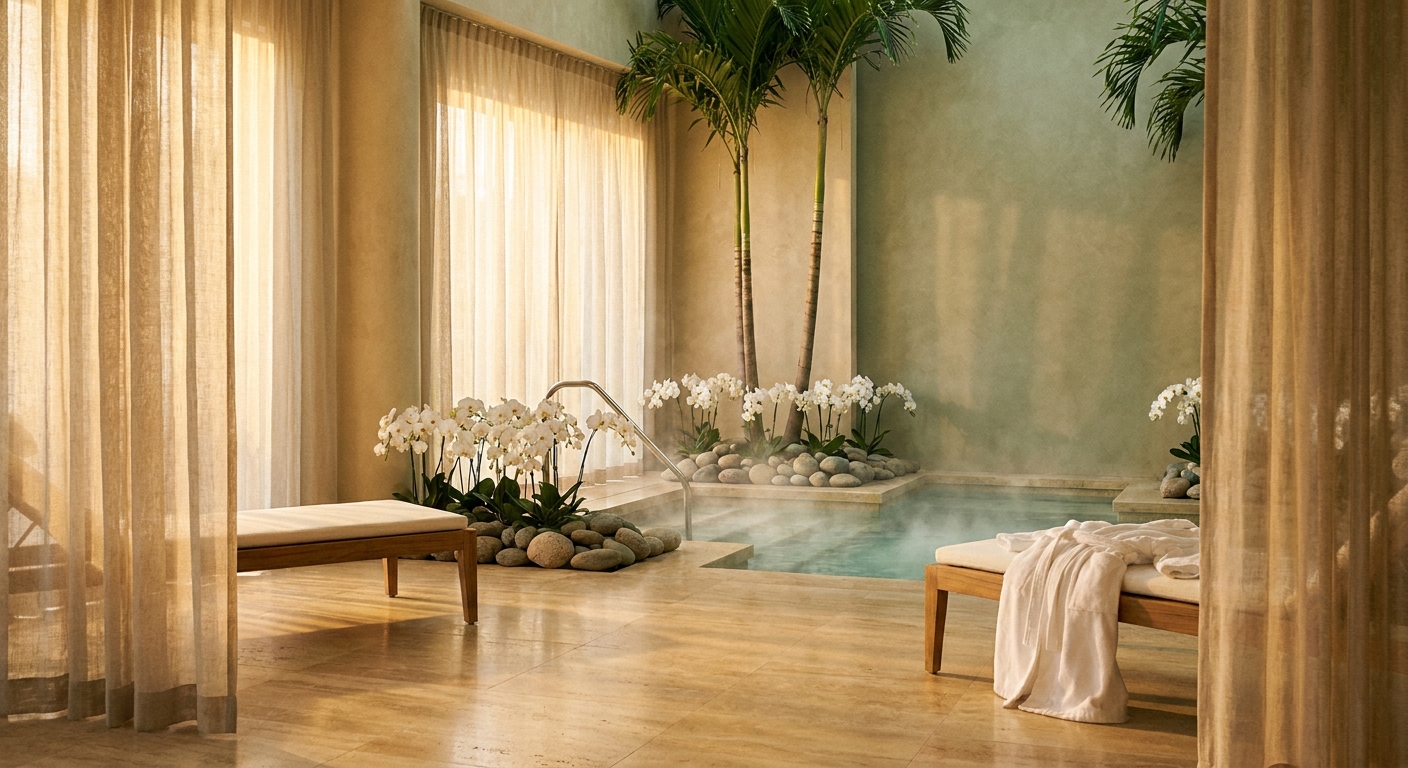
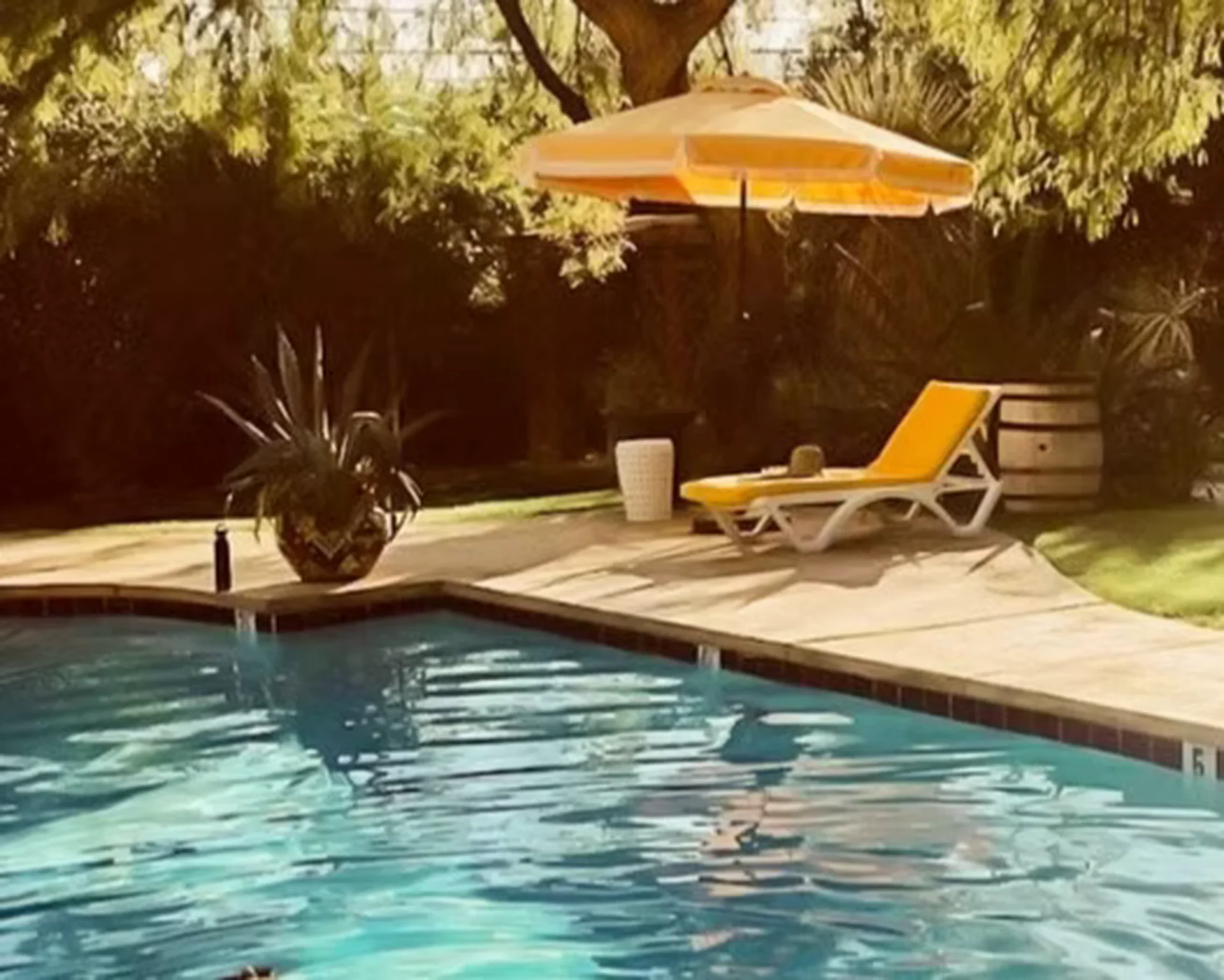
Some places ask you to perform. Miracle Hill asks you to arrive. Eighty-five mineral pools, a hill that has been quietly heating its own water for longer than California has been a state, and a pace that takes your shoulders down two inches the moment you cross the gate.
The short version: Miracle Hill sits on a natural geothermal aquifer in Desert Hot Springs, California. Water rises from roughly 1,800 feet below ground at 140°F, naturally rich in lithium, calcium, magnesium, and sodium. Cooled to a range of bathing temperatures, it fills our 85+ pools without filtration chemicals or additives. People have been soaking here for therapeutic relief since the 1940s.
A century of seekers, on the same hill.
Long before this was a resort, it was a quiet stop. Cahuilla travelers knew the springs as a place to rest the body and the spirit. By the 1940s, word had spread to Hollywood and beyond — arthritic actors, exhausted GIs returning from the Pacific, painters, writers, and the occasional curious doctor all began making the drive east from Los Angeles to a hillside that promised something specific: relief.
What they found was a fault line. Or rather, what the fault line had quietly engineered: a shallow, mineral-charged aquifer that the earth heats from below and pushes up through fissures in the granite. The water arrives clear, faintly sweet, almost odorless — a rarity among hot springs, most of which carry the strong sulfur signature that gives the genre its reputation. Desert Hot Springs water is famously different. You can drink it. (We bottle it. People often do a double-take when they realize the glass on the dinner table is the same source as the pool.)
What is actually in the water.
A laboratory analysis of our spring tells a fairly poetic story. The dominant ions are calcium, magnesium, sodium, and bicarbonate — each one with a body of clinical literature behind it. Trace lithium gives the water its mood-softening reputation. Silica is part of why long-time soakers will tell you their skin feels smoother for days after a visit. There is no chlorine and no sulfur, which is why the air around the pools smells, mostly, like creosote and dry stone after a rain.
In plain language:
- Magnesium — absorbed transdermally during a long soak; widely associated with muscle release and easier sleep.
- Calcium & bicarbonate — gentle on the skin, alkaline-leaning, a softer feel than hard tap water.
- Trace lithium — in micro-doses, has a long folk reputation for steadying mood.
- Silica — the "afterglow" mineral; leaves skin and hair feeling silkier than chlorinated water ever could.
None of this is medicine. It is, however, a particular chemistry that the body responds to in noticeable ways — ways that bottled imitations of "spa water" simply cannot replicate.
The ritual — how to soak well.
There is a way to do this that gets you the most out of the water, and it is not the way most people think. Hot tubs at home have trained us to jump in, get hot, and get out. Mineral water rewards a slower architecture.
1. Begin warm, not hot.
Start in one of the cooler pools — around 95°F. Ten minutes here lets your circulation open before you ask anything else of it. Read something. Stare at the mountain. Resist the urge to check your phone.
2. Move to the warm pools (102–104°F).
Twenty minutes is plenty. This is the therapeutic window where the magnesium and calcium do most of their work. If your hands or feet start to tingle, you are dehydrating. Step out, take water, return.
3. Cool plunge or shower.
Even a brief 30-second cool rinse closes the loop. It signals the nervous system to drop into rest-and-digest, which is the part of the day most of us are missing.
4. Rest in shade for 15 minutes.
Do not skip this. The minerals are still finishing their work. A chaise, a pitcher of cucumber water, and the sound of a fountain — that is where the actual change happens. The locals call this the desert nap, and it is the closest thing to free medicine we know of.
You arrive tired. The water does the rest.
Why April is the season.
The waters are wonderful in any month, but April is the one we mark on our own calendars. The desert evenings are still cool enough that an open-air soak feels generous rather than punishing. Daytime highs sit in the mid-80s. Wildflowers carpet the canyons just beyond the property — ocotillo flames, desert lavender, the rare Joshua-tree bloom — so a morning hike followed by an afternoon soak is the most natural pairing in the whole calendar.
By June, the heat takes over and the soaking moves indoors and after dark. By September, the pools are spectacular but the air is sharp at night. April is the brief, perfect window where you can move slowly between hot pool and shaded chaise, and the world cooperates.
Who comes here.
In a single afternoon you might find: a couple from Vancouver on their fifteenth visit; a hiker drying out after the Pacific Crest Trail; two writers from Brooklyn working in silence on opposite chaises; a yoga teacher from San Diego who treats the springs as professional infrastructure. The water flattens out the usual signals of who-does-what. Everyone is just a body, in warm water, on a quiet hill.
If you want a thesis statement: Miracle Hill is for people who would like to do less, and have it count for more.
Key takeaways
- Our 85+ pools are filled directly from a natural geothermal aquifer — no chlorine, no sulfur, no additives.
- The mineral profile (magnesium, calcium, lithium, silica) is what your skin and nervous system are actually responding to — not the heat alone.
- Soak in stages: cool → warm → cool plunge → rest in shade. The rest is where the change happens.
- April is the year's best month: cool evenings, wildflower hikes, and long soaks with no heat penalty.
- Hydrate aggressively. Treat your visit like an event, not a stop.
Frequently asked
How long should I stay in the hot pools?
Most guests do best with 15–25 minute intervals at 102–104°F, separated by short cool-downs. Listen to your body — tingling fingers, lightheadedness, or a racing heart all mean it is time to step out and rehydrate.
Are the waters safe during pregnancy or for guests with medical conditions?
Hot mineral water is not recommended during pregnancy or for guests with cardiovascular conditions, uncontrolled blood pressure, or recent surgery. We always recommend speaking with your physician before your visit. Our cooler pools (around 95°F) are a gentler option for many guests.
Can I drink the spring water?
Yes. Desert Hot Springs is famous for the rare combination of geothermal heat and naturally potable mineral water. We serve it at the dining tables and refill stations are placed throughout the property.
What should I bring for a day visit?
A swimsuit, a light layer for after sunset, and an open afternoon. We provide robes, towels, and water. Leave the laptop in the car — you will not need it.
Do I need a reservation, or can I drop in?
Day passes are available, but April weekends sell out. We strongly recommend booking ahead, especially if you would like a chaise in the shaded section near the main pool.
How is the water cleaned without chlorine?
Each pool is drained and refilled regularly with fresh aquifer water — the natural mineral content and continuous turnover keep the water exceptionally clean. We do not recirculate or chemically treat the springs.
We saved you a chaise
by the pool.
Day passes and overnight stays are open through the month. Come early, stay late, and let the hill take care of the rest.